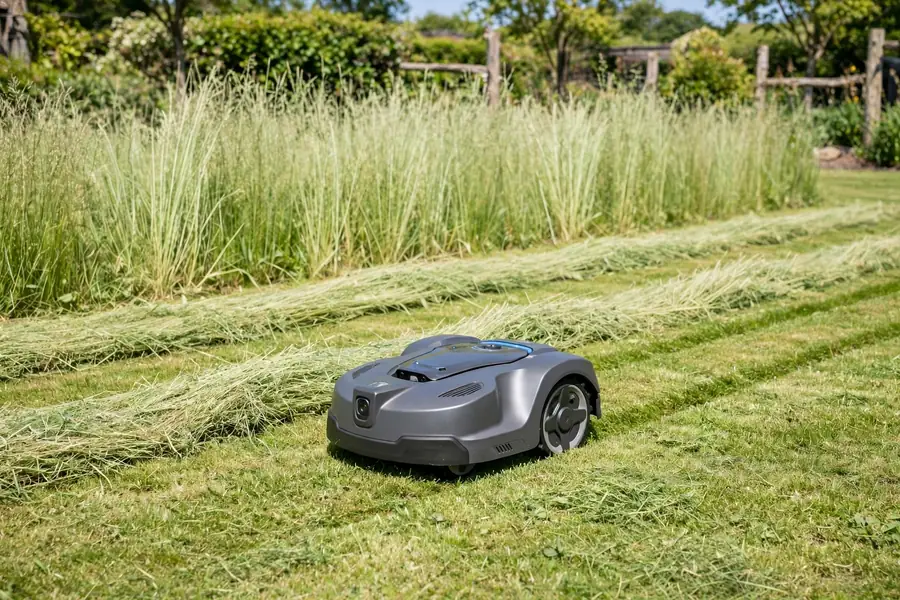
If your robot mower is leaving uncut grass, the most likely causes are dull or damaged blades, a cutting height set too high, a schedule that does not keep up with growth, or a coverage problem caused by the boundary layout, lawn shape, or a narrow area the mower cannot reach. A few uneven marks after one session can be normal, especially with a random-pattern mower. Repeated strips in the same place, or torn grass tips, usually point to a problem worth fixing.
Before you inspect the blades or underside, switch the mower off and disconnect it according to its manual. Never reach under the deck while the blades could move, or bypass a safety sensor.
When Uncut Strips Are Normal
Not every uneven patch means your mower is faulty. Robot mowers trim a small amount often, rather than cutting a long lawn down in one pass. A random-pattern mower crosses the same area from different angles over several sessions, so some patches may look slightly taller after one session. Strips in the same place after several sessions suggest a problem.
How the Robot Mower Cutting Pattern Affects Coverage
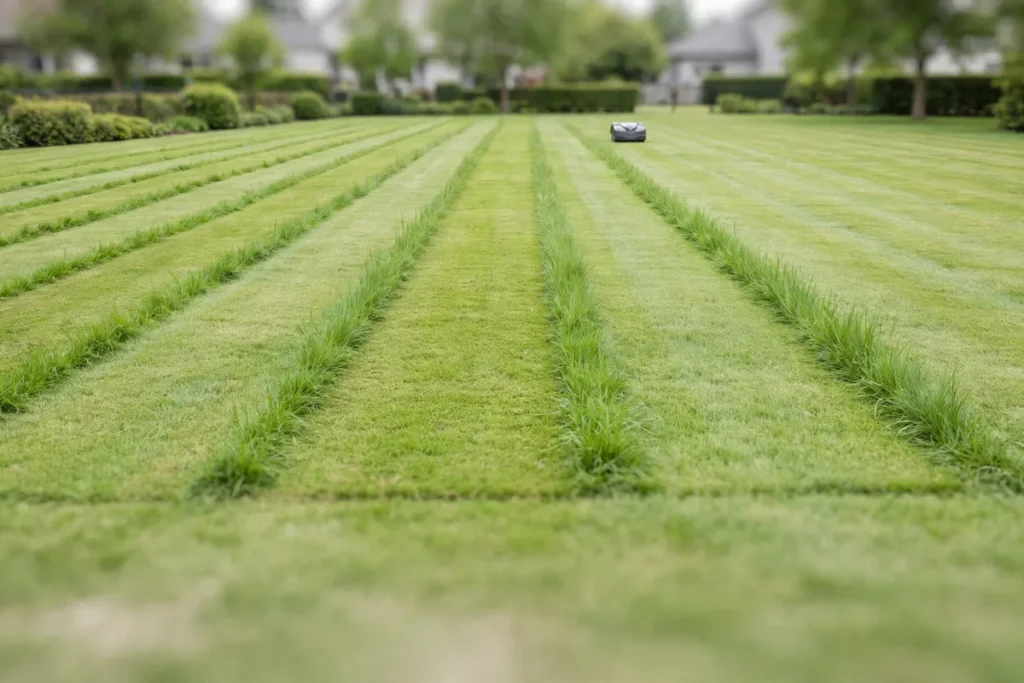
The robot mower cutting pattern helps you tell a coverage problem from a blade problem. A random-pattern mower changes direction at the boundary or an obstacle and does not follow a planned grid, so coverage depends on how long and how often it runs. If working time is too short, some areas are visited less often and taller strips appear. A systematic mower follows parallel lanes or a planned route from a map, but it can still leave strips if the map is out of date or it turns too early. A straight strip that repeats in the same place often points to a mapping or boundary issue.
Robot Mower Leaving Uncut Strips of Grass: Blade Problems
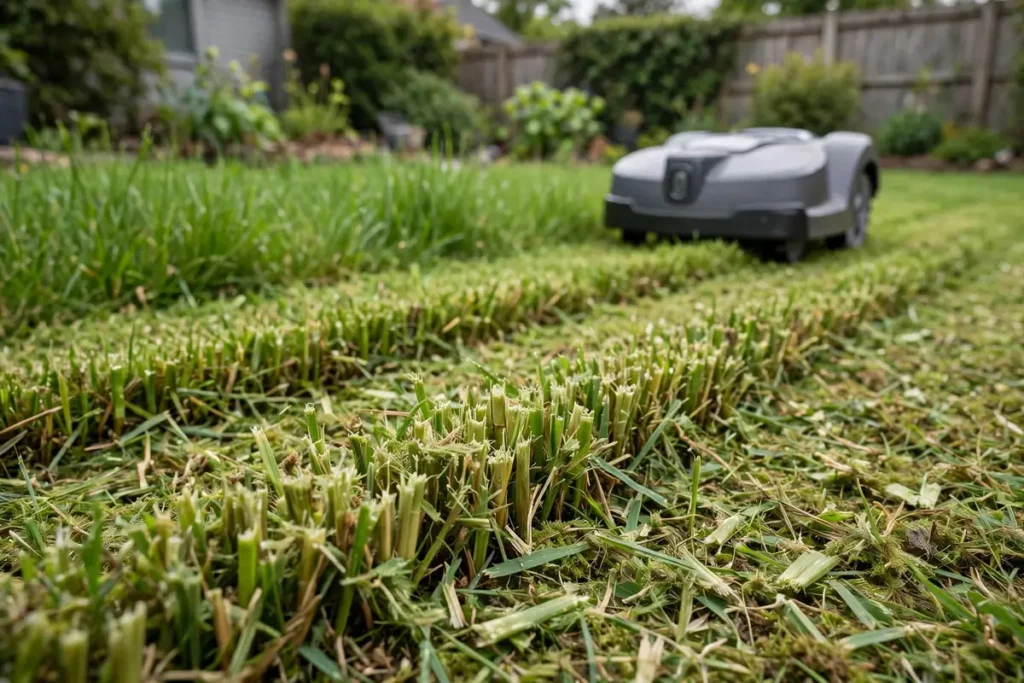
Robot mower blade problems are one of the most common causes of uncut strips. The blades are small and sharp, designed to slice grass tips cleanly. When they become dull, chipped, or bent, they tear or bend the grass instead of cutting it, and the bent blades spring back up, leaving a strip that looks uncut. Check the blades with the mower switched off and disconnected, following your manual. Look for blades that are blunt, nicked, cracked, bent, loose, or missing; if one blade on a rotating disc is damaged, the cutting circle becomes uneven. Grass and mud packed under the deck can also push grass flat and stop the disc spinning freely, so clean the underside carefully as directed in the manual. If grass tips look white, frayed, or torn rather than cleanly sliced, dull blades are a strong suspect. Use only the blade type specified in your manual.
Cutting Height
Cutting height can make a lawn look striped even when the blades are sharp and the mower covers the area. If the height is set too high, the grass stays taller than you expect, and differences between areas cut on different days become more obvious. If it is set too low, the mower may scalp high spots, push grass flat, or struggle in thick growth. Check the setting on the mower or in the app, and note whether you recently raised it for dry weather or lowered it for a tidier finish. In hot, dry conditions, many owners raise the height to help the grass cope. Change the height gradually, and remember uneven ground can change the effective cutting height for a moment.
Robot Mower Lawn Coverage and Schedule
Poor robot mower lawn coverage is a common reason for missed strips across a large or complex lawn. A mower needs enough time to visit every part of the lawn often enough; if it does not, grass in the least-visited areas grows taller between visits. Check whether the mower runs as often as the manual suggests for your lawn size and growth rate, and whether the schedule has been shortened or interrupted by rain delays or charging problems. A mower close to its maximum capacity may cope in slow growth but fall behind when grass grows quickly.
Boundary Layout, Edges, and Lawn Shape
The boundary layout decides where the mower can go, how it turns, and how much room it has at the edge. A boundary that is too tight, too close to a wall or bed, or shaped with sharp corners can leave strips that blade sharpening will not fix. Most mowers do not cut right up to the boundary wire or the edge of a mapped area, because the cutting disc sits inside the body, so there is a small uncut margin around the edge. Check the boundary where strips appear: is the wire following the true edge of the lawn, and is there a sharp corner where the mower turns early? A long, thin lawn, an L-shaped lawn, or separate areas joined by a narrow passage are harder to cover evenly than a simple rectangle. If strips are mainly in a side area, the mower may need a separate zone or longer working time.
Narrow Areas and Obstacles
Robot mower missed strips often appear in narrow areas. A passage between a fence and a raised bed, a strip beside a driveway, or a gap between a shed and a hedge can be wide enough to enter but too narrow for the mower to turn or overlap its passes, leaving a strip down the middle or along one side. Walk the narrow area at mower height and check whether there is room to turn, whether a branch or toy blocks the passage, and whether uneven ground tilts the mower. Obstacles in the open lawn cause the same problem on a smaller scale: most mowers leave a small uncut ring around a tree trunk or sprinkler head, which is normal.
Grass Growth, Wet Grass, and Thick Patches
Grass condition can make a mower look faulty when it is struggling with growth it was not designed to cut in one pass. Wet grass bends and clumps, and it can clog the blades. If strips appear mainly after rain or when dew is heavy, try mowing later in the day when the grass is drier. Long grass is a similar problem: if the lawn has not been mown for a while, the mower may push it flat or cut only the top. Raise the cutting height for the first few sessions, then lower it step by step. Thick patches can also cut unevenly, because dense grass can slow the cutting disc.
A Step-by-Step Check
Work through the causes in order, changing one thing at a time. First, note where the strips are: in the same place, across the whole lawn, or only along edges? Next, with the mower switched off and disconnected, inspect the blades and underside and replace worn blades. Then check the cutting height, schedule, boundary, and map. Finally, test the mower in a small, open, flat area if your model allows it. If it cuts cleanly there but leaves strips in the problem area, the cause is more likely coverage or boundary layout. If it leaves strips even on easy ground, the blades, deck, or height are more likely the cause.
| What you see | Likely cause | What to check first |
|---|---|---|
| Strips in the same place | Boundary, map, or narrow area | Boundary layout and turning room |
| Strips across the whole lawn | Dull blades, height, or short schedule | Blades, deck, and height |
| Torn or frayed grass tips | Dull or damaged blades | Blade condition and fit |
| Strips after rain | Wet grass clogging the deck | Deck cleanliness and mowing time |
| Strips in fast-growing patches | Growth faster than the schedule | Mowing frequency and height |
When the Pattern Points to a Fault
Most uncut strips have a simple cause, but some patterns suggest a fault. Contact the manufacturer or a qualified repair service if the mower leaves strips on flat, dry, open grass even after you have checked the blades, deck, height, and schedule, or if the problem started suddenly after a knock or a software update. Other warning signs include a cutting disc that does not spin freely, a blade that keeps coming loose, and unusual grinding or rattling noises. Note the error message and where the strips appear. Do not open the motor housing, battery compartment, or sealed electronics unless your manual specifically tells you to. If the mower is under warranty, contact the manufacturer or retailer before attempting a repair.
How to Prevent Uncut Strips
Prevention is mostly regular maintenance and a schedule that matches the lawn. Before each mow, remove stones, sticks, toys, and hoses. Weekly, check the underside for packed grass and mud. Check the blades regularly, and replace them when the manual says they are worn, or sooner if they are damaged or the grass tips look torn. Monthly, walk the boundary and look for lifted wire and overgrown branches. Seasonally, reassess the cutting height and schedule.
Conclusion
A robot mower leaving uncut grass is usually telling you something simple: the blades need attention, the cutting height does not match the growth, the schedule is too short, or the boundary and lawn shape are leaving part of the area uncovered. A few uneven marks after one session can be normal, but strips that repeat in the same place deserve a closer look. Start with the blades and underside, check the height and schedule, then look at the boundary and narrow areas. Most owners can fix it with cleaning, a blade change, a height adjustment, or a longer schedule. If it still leaves strips on easy ground, contact the manufacturer or a qualified repair service.
Frequently Asked Questions
Why is my robot mower leaving uncut strips in the same place every time?
Strips in the same place usually point to a local cause, such as a tight boundary, a sharp corner, a narrow passage, or an out-of-date map. Check that area first.
Is it normal for a robot mower to leave some uncut grass after one session?
Yes, a small amount can be normal, especially with a random cutting pattern. The mower covers the lawn over several sessions, so the pattern should even out. If strips remain in the same place, the cause is more likely coverage, blades, or boundary layout.
How do I know if dull blades are causing robotic mower uneven cutting?
Look at the grass tips. Cleanly cut tips suggest the blades are working, while white, frayed, or torn tips suggest dull or damaged blades. Also check for bent, loose, or missing blades.
Can cutting height cause a robot mower to miss strips?
Yes. A height set too high leaves the grass taller than expected, while a height set too low can scalp high spots or struggle in thick growth. Change the height gradually.
Why does my robot mower leave strips when the grass grows quickly?
Fast growth can outpace the schedule, especially in spring after rain and warm weather. Sunny or fertilised patches grow faster and stand out first. Increasing mowing frequency for a while usually helps.
When should I contact the manufacturer about uncut strips?
Contact support if the mower leaves strips on flat, dry, open grass after you have checked the blades, deck, height, schedule, and boundary, or if the disc does not spin freely or you hear unusual noises. Note the error message and the location of the strips first.