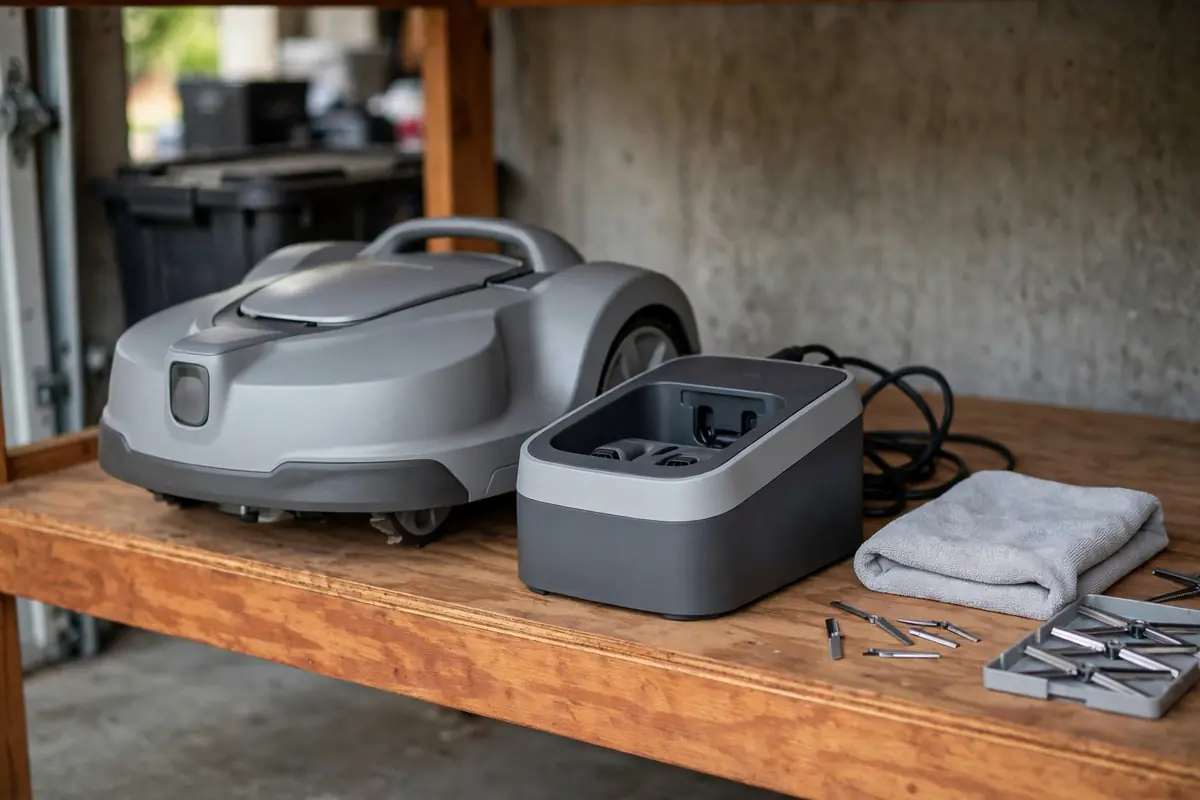
Learning how to store a robot lawn mower for winter protects its battery, blades, and electronics, and makes spring much easier. In short: clean it, inspect it, prepare the battery as your manual directs, store it somewhere dry and sheltered, and keep the accessories together.
The step people get wrong is assuming every mower is the same. Battery types, charging routines, and storage advice vary by model, so your manual is the final authority. This guide covers robotic lawn mower winterizing, with clear points to check the manual first.
When to Put Your Robot Mower Away for Winter
Most owners stop regular mowing when grass growth slows sharply in late autumn. That is the right time to start, rather than waiting for the first hard frost or snow. A mower left outside in freezing, wet weather is more likely to suffer damp, corrosion, and battery stress.
Finish the normal schedule first, then do a final mow at your usual height. Do not store a wet or muddy mower. If winters are mild and grass keeps growing, you may not need full winter storage at all.
How to Store a Robot Lawn Mower During Winter: Step-by-Step
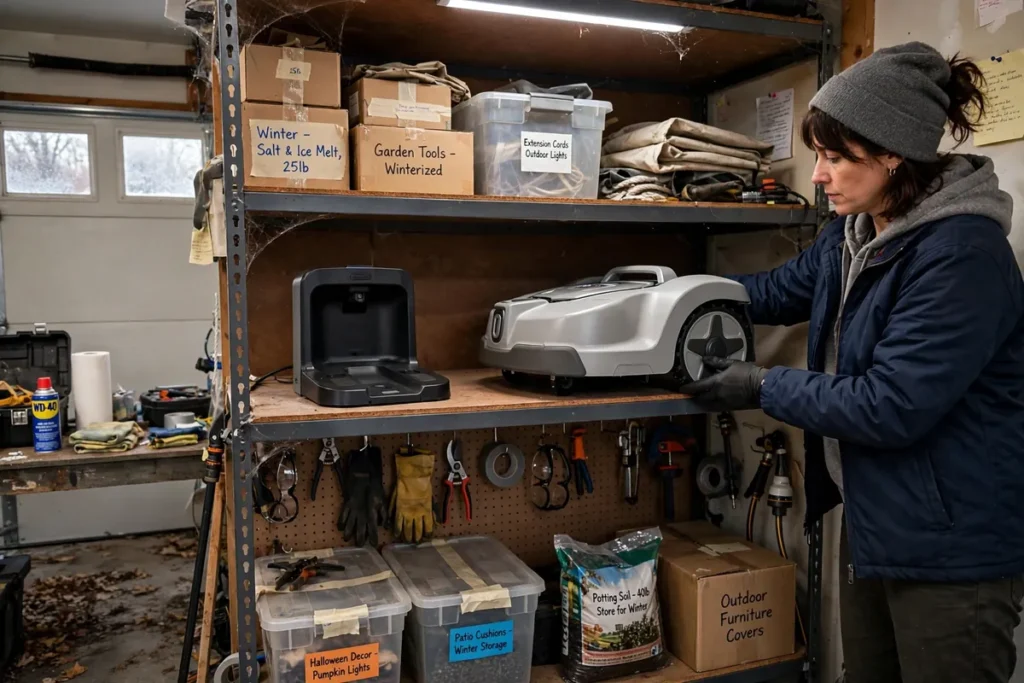
Work through these steps on a dry day. Allow time for the mower to dry completely before you put it away, because damp stored for months can cause mould and corrosion.
1. Switch Off and Disconnect the Mower Safely
Before you touch the underside, blades, wheels, or sensors, switch the mower off and disconnect it according to its manual. That usually means using the main power switch and removing it from the charging station. Do not rely on the app alone, and do not work on the mower while it is charging. Keep children and pets away, and wear gloves when you handle the cutting disc and blades. They are small, but they are sharp.
2. Clean the Mower Thoroughly
Grass, soil, and moisture left on the mower over winter can cause corrosion, odours, and clogged parts. Brush loose debris from the body, wheels, and underside with a soft brush. Use a damp cloth for stubborn dirt, and a plastic scraper or wooden stick for compacted grass if your manual allows it.
Do not use a pressure washer unless your manual specifically says it is safe. High-pressure water can force its way into seals, sensors, and bearings. Avoid harsh solvents or abrasive cleaners. Clean the cutting disc, blades, wheels, sensors, and charging contacts, then leave the mower somewhere ventilated until fully dry.
3. Inspect the Mower Before Storage
Winter is a good time to spot problems while you still have time to order parts. Look for cracked or worn blades, a damaged cutting disc, loose screws, cracked wheels, worn treads, and damaged bumpers. Check that the wheels turn freely, and look for water inside the battery compartment.
Replace worn blades now if you can, or note that they need replacing before spring. Blunt blades tear grass rather than cutting it cleanly.
If you find a damaged or swollen battery, a cracked housing, leaking fluid, or a strong unusual smell, do not charge the mower or try to repair the battery yourself. Do not open or puncture a battery, or put it in household waste. Contact the manufacturer or an authorised service centre.
4. Prepare the Battery as Your Manual Directs
Do not store a mower with a completely flat battery for months, and do not assume you should leave it on charge all winter. Some models should be stored partly charged and topped up occasionally; others have a winter or storage mode. Follow the charge level and recharging interval in your manual, as explained in the battery section below.
If the manual tells you to remove the battery, do so carefully and store it as directed. If it tells you to leave the battery in the mower, do that instead. Do not remove a battery that is not designed to be removed by the owner.
5. Care for the Charging Station and Accessories
Unplug the charging station from the mains before you move or clean it. Brush off dirt and leaves, wipe the charging contacts, and check the power cable and plug for damage. If the cable is frayed, cracked, or chewed, do not use it again until it has been checked or replaced with the correct part.
In many cases the station can be stored indoors with the mower, which is often best where winters are wet or freezing. If your manual says it can stay outside, make sure it is disconnected from power and not sitting in standing water. Store boundary wire, pegs, spare blades, screws, and tools together in a labelled box.
6. Store the Mower in a Dry, Sheltered Place
Store it indoors in a dry, ventilated, frost-free place if possible, such as a garage that stays dry. Keep it off a damp concrete floor where practical, on a shelf, pallet, or mat, and out of direct sunlight. Avoid storing it next to chemicals, fertiliser, or fuel.
Cover it loosely with a breathable cover or an old sheet to keep dust off, but do not seal it in plastic, which can trap moisture. Make sure it cannot be knocked over, and that nothing heavy is stacked on top of it. A damp shed with a leaking roof is not a good store, even if it keeps rain off at first glance.
Robot Mower Battery Winter Storage: What to Check in Your Manual
Robot mower battery winter storage deserves its own check, because the wrong routine can shorten battery life. Most modern mowers use lithium-ion batteries, but charging behaviour, storage charge levels, and whether the battery should stay in the mower still differ by brand and model. Do not copy a routine from a different brand, a forum post, or an older mower.
Before storage, check your manual for the recommended charge level, whether the battery should stay in the mower or be removed, whether the mower has a winter or storage mode, how often it should be recharged during storage, and the recommended storage temperature range.
If you cannot find this information, contact the manufacturer for your exact model. Do not open or charge a damaged battery, or store a battery somewhere damp, very hot, or freezing unless your manual says that is acceptable. Check it every month or two during long storage if your manual recommends it.
Charging Station Care and Boundary Wire in Winter
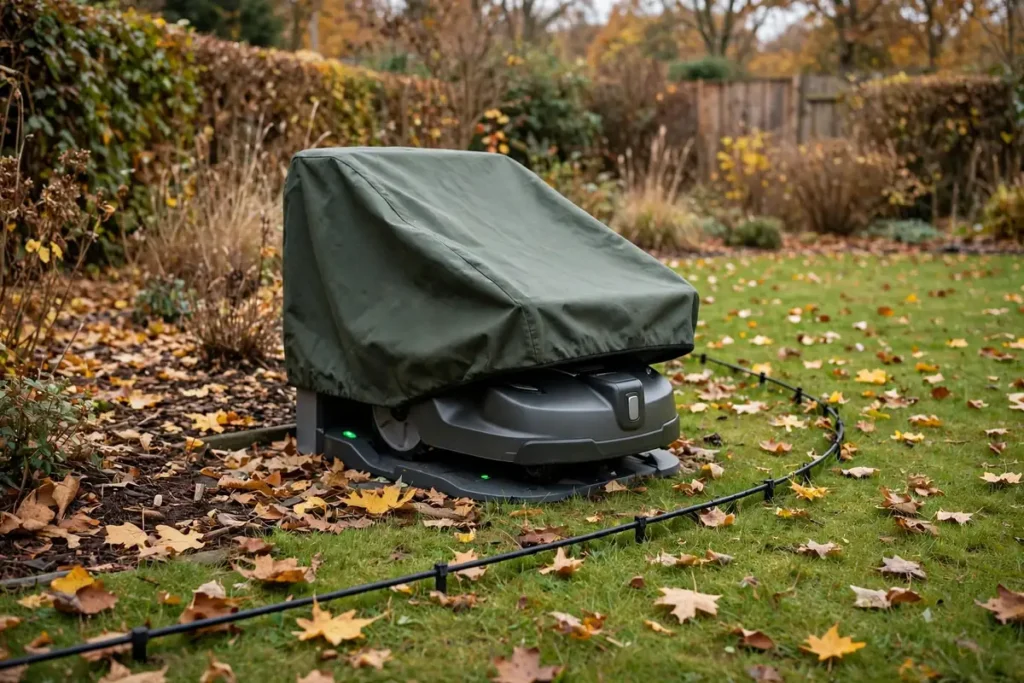
The charging station is easy to forget once the mower is indoors, but it also needs winter mower maintenance. If you leave it outside, disconnect it from the mains, clean it, and protect it from snow, ice, and standing water. A station left powered on outdoors all winter can waste electricity and may be damaged by frost or water in the electronics.
Boundary wire that is buried or pegged down can usually stay in place, unless your manual says otherwise. Walk the boundary once before winter and look for lifted, exposed, or damaged wire. Note repairs for spring.
If your system is wire-free, follow the manual for each beacon or reference station. Some parts may need to come indoors. Store small parts in the same labelled box as your spares.
Winter Mower Maintenance Checklist
Use this table as a quick record. Tick each task off, and keep the list with your spares for spring.
| Task | What to do | Why it matters |
|---|---|---|
| Switch off | Power down as the manual directs | Makes cleaning safe |
| Clean | Brush, wipe, and dry fully | Reduces corrosion and mould |
| Clean contacts | Wipe sensors and charging contacts | Helps charging in spring |
| Inspect | Check blades and wheels; note parts | Avoids a poor first cut |
| Battery | Follow the manual on charge and top-ups | Protects battery life |
| Charging station | Unplug, clean, and check the cable | Prevents frost and water damage |
| Accessories | Box spares and tools in one place | Avoids lost parts |
| Storage spot | Store indoors, dry, out of sun | Reduces damp and corrosion |
Common Mistakes in Robot Mower Off Season Care
Off season care goes wrong most often through small oversights. The most common is storing the mower wet or dirty: even damp grass can hold moisture against metal parts for months. The second is ignoring the battery — leaving it flat all winter, or on charge indefinitely without checking the manual.
Other mistakes include pressure-washing the mower, sealing it in plastic, storing it outside under a thin cover, and forgetting where the station and spares are. A worn blade or cable in autumn will not improve over winter. Do not try a repair you are not confident about, or bypass a safety feature.
Spring Restart Checklist
When grass starts growing again, do not simply put the mower outside and expect it to work. Inspect it for damage, dust, or moisture, check the blades and replace them if they are blunt or damaged, and wipe the wheels, sensors, and charging contacts clean.
Charge the mower as the manual directs and check that it holds a charge and starts normally. Reconnect the station, check the cable, and confirm the boundary or wire-free setup is intact. Run a short test mow and watch for error messages or unusual noises. If it will not charge or shows a warning, check the manual first.
Conclusion
Good winter storage is deliberate, not complicated. Clean the mower, inspect it, prepare the battery as your manual directs, look after the station and accessories, and store everything somewhere dry and sheltered. That protects the battery, blades, and electronics, and makes spring far simpler.
Frequently Asked Questions
Should I leave my robot mower outside all winter?
In most cases, no. Months of frost, snow, and damp can damage the battery, electronics, and metal parts. Store it indoors in a dry, sheltered place if you can.
How should I store a robot mower battery for winter?
Follow your manual for your exact model. Many recommend storing the battery partly charged, not flat or full, and topping it up during long storage. Do not open the battery or charge a damaged one.
Do I need to remove the boundary wire for winter?
Usually not. Wire that is buried or pegged down can normally stay in place, unless your manual says otherwise. Check it before winter for lifted, exposed, or damaged sections, and note repairs for spring.
Can I leave the charging station outside in winter?
It depends on the model. Some stations can stay outside when disconnected, while others should be stored indoors. Unplug it, clean it, and check the cable. When in doubt, store it indoors.
What should I do if my robot mower will not start in spring?
Check that the battery is charged, the contacts are clean, the station is connected correctly, and the boundary or wire-free setup is intact. Replace worn blades and check for error messages. If the battery will not hold a charge, follow the manual.
How often should I check the mower during winter storage?
A quick check every month or two is enough, especially if your manual recommends topping up the battery. Look for damp, damage, or swelling, and check the area is still dry.