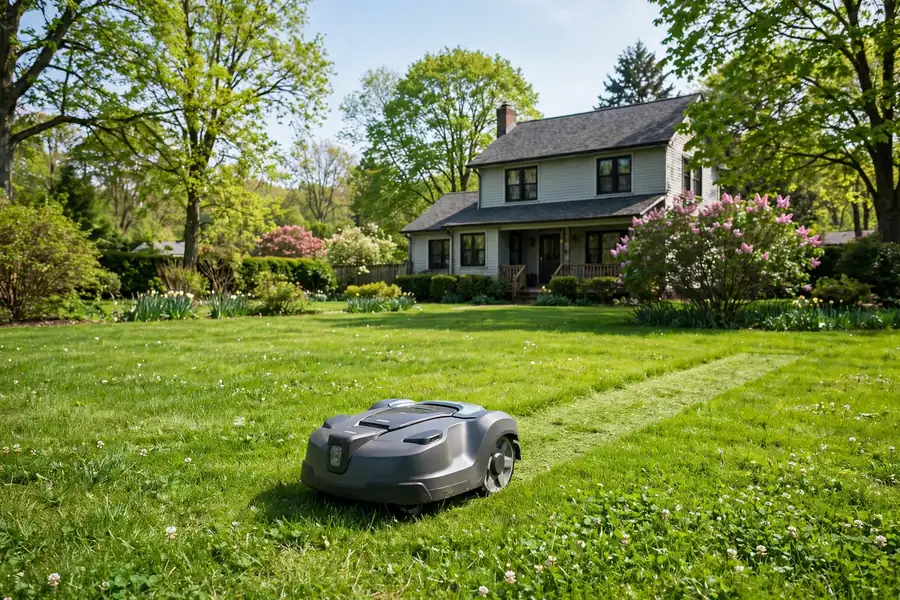
Good robot mower schedule setup does not mean finding one perfect timetable and leaving it alone all year. It means matching how often and when your mower runs to how fast your grass is growing, the weather, and how you use the lawn. Most lawns need more frequent mowing in spring, less in hot, dry spells and late autumn, and little or none in winter in cold climates.
This guide explains how to build a seasonal mowing schedule you can adjust as conditions change. It does not prescribe one universal schedule, because grass type, climate, and watering all affect the answer. Use the ideas below as starting points, watch the lawn for a week or two, and then adjust.
What Robot Mower Schedule Setup Actually Controls
A schedule usually controls which days and hours the mower works, and how much of the lawn it covers in each session. Some apps also let you set different schedules for zones, change cutting height, or pause mowing in rain. The exact options depend on your model, so check the manual and app for your mower.
A robot mower usually trims a small amount often, rather than cutting a lot once a week. If it runs too rarely during fast growth, it may leave longer grass. If it runs too often when growth has slowed, it adds unnecessary wear. Review the schedule weekly.
How Grass Growth Should Drive Your Robotic Mower Mowing Schedule
The most important factor in any robotic mower mowing schedule is lawn growth mowing frequency — how quickly the grass is putting on new length.
Growth depends mainly on temperature, moisture, daylight, and grass type. Cool-season grasses, common in cooler northern regions, often grow most in spring and autumn. They may slow in hot, dry summer weather. Warm-season grasses, common in hotter southern regions, often grow most in late spring and summer, then slow or go dormant as temperatures fall.
That contrast is why one schedule cannot work everywhere. Your own lawn is the best guide. If the mower keeps the lawn at a fairly even height with little visible clipping, the frequency is about right. If the lawn looks shaggy before the next run, add a mowing day, within your mower’s limits.
Cutting height matters, too: if the grass has grown long, raise the height first, then lower it in small steps. Sunny, watered areas may grow faster than shaded corners, so use zones if your mower supports them.
A Seasonal Mowing Schedule Framework
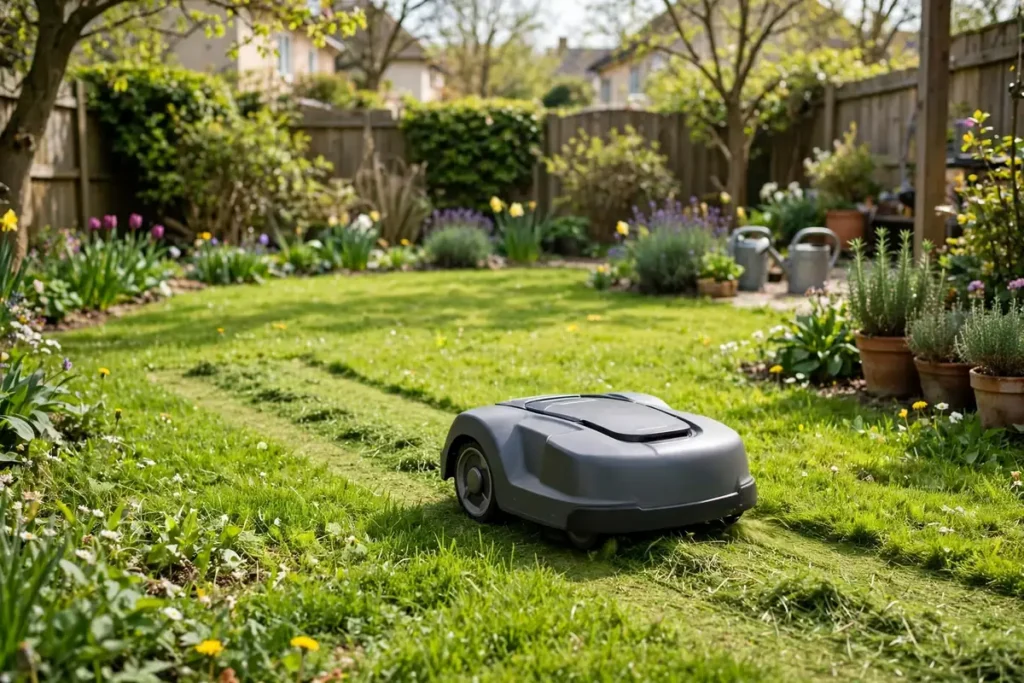
The table below is a framework, not a set of rules. Treat each row as a starting point to test.
| Season | What usually happens | Scheduling approach to try first |
|---|---|---|
| Spring | Growth picks up as temperatures rise. | Increase mowing days gradually as growth speeds up. |
| Summer | Growth may be fast, or slow in heat and drought. | Mow more often when growth is fast; ease back if the lawn is dry or stressed. |
| Autumn | Cool-season growth may pick up, then slow; warm-season growth usually slows. | Clear leaves, and reduce frequency as growth slows. |
| Winter | Growth is usually minimal or the grass is dormant in cold climates. | Reduce or pause mowing, following your manual. |
The key point is the direction of change, not an exact number of days. Spring usually means more mowing; late autumn usually means less. Summer depends on local weather.
Spring: Restart Gradually and Increase as Growth Picks Up
Early in spring, a light schedule may be enough; as temperatures rise, add mowing days or extend the daily mowing time.
Before the first spring mow, clear winter debris and check the boundary wire or map and the charging station. Follow your manual for spring checks, including blade condition. Do not start at the lowest cutting height on long grass.
Mornings can be damp with dew, and wet grass can clump or make the mower work harder, especially on slopes. If your lawn is often wet early in the morning, try starting a little later. Very wet or waterlogged ground can cause wheel slip or the mower getting stuck, so pause the schedule until the ground firms up.
Summer: Match the Schedule to Heat, Water, and Growth
A well-watered warm-season lawn may grow quickly all summer and need frequent mowing. A cool-season lawn in a hot, dry spell may slow down or go dormant, and mowing it as often as in spring would add stress.
Watch the lawn, not the calendar. If the grass looks dry, thin, or stressed, consider mowing less often, raising the cutting height slightly, and mowing at a cooler time of day. Do not scalp a stressed lawn to keep it short.
Midday heat can be hard on the battery and the grass. Many owners choose morning or late-afternoon sessions, and avoid scheduling the mower during watering. Build in mower-free windows for play and gatherings, and keep children and pets away while it is working.
Autumn: Slow Down, Clear Leaves, and Prepare for Winter
In cooler regions, growth may pick up again after summer heat, then slow as temperatures fall. In warmer regions, warm-season grass usually slows steadily through autumn.
Leaves are the main practical challenge. A thick layer can hide obstacles and clog the cutting area, so clear leaves before a scheduled run, or pause the schedule until you have cleared them.
As growth slows, reduce mowing days step by step rather than stopping suddenly, unless your manual advises otherwise.
Winter: Pause, Reduce, or Keep a Light Schedule
In cold regions where grass stops growing or snow covers the lawn, most owners pause mowing for the season. In mild regions, a light schedule may still be useful.
Do not run the mower on frozen or snow-covered ground unless your manual explicitly says the model is designed for those conditions. Ice and frozen soil can damage the lawn and make the mower slip. Cold can also affect battery performance, and some manufacturers advise bringing the mower and battery indoors for winter storage.
If you pause mowing, use the app to pause or disable the schedule. In a mild winter, mow only when the grass has actually grown and the ground is dry and not frozen.
Choosing Robot Mower Mowing Times
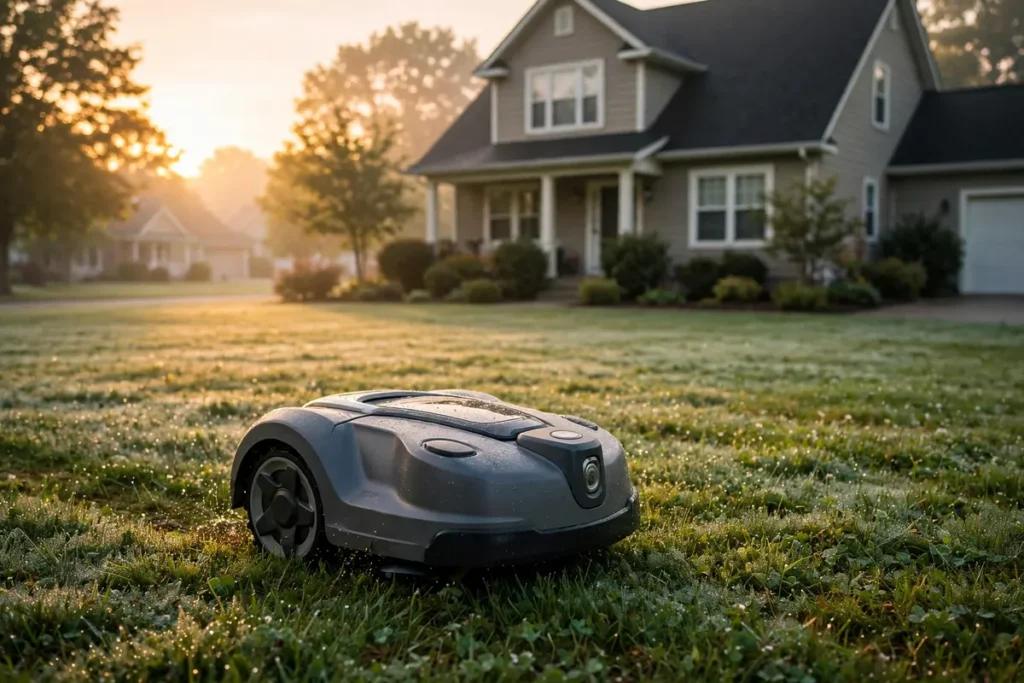
Choosing when the mower runs is as important as choosing how often it runs. The best robot mower mowing times balance grass conditions, noise, lawn use, and your mower’s capabilities.
Dry grass cuts more cleanly than wet grass. Mid-morning to late afternoon often gives the driest grass.
Robot mowers are generally quieter than traditional mowers, but they still make some sound. Avoid very early morning or late-night sessions, especially near a neighbor’s bedroom window. Schedule mowing when you can check the mower if needed, and avoid times when children or pets will be unsupervised on the lawn. Check your manual for daily runtime limits: a large lawn may need several sessions across the week.
Using a Robot Mower App Schedule
Most modern robot mowers are scheduled through a mobile app, although some also have controls on the mower or charging station. A robot mower app schedule is usually the easiest place to make seasonal changes.
Before changing anything, make sure the app is connected and the mower’s clock and time zone are correct. A wrong clock is a common cause of a mower starting at the wrong time. Check the schedule after any update.
Common options, where your model offers them, include:
- Mowing days: Add days when growth speeds up; remove days when it slows down.
- Start and end times: Set a start time and, if available, an end time. Leave a buffer for the return to the dock.
- Zones: Give fast-growing areas more time.
- Rain delay or sensor: Enable it if available.
- Cutting height: Change it in small steps.
- Temporary pause: Use it when you are away, the lawn is being treated, or you need the lawn free.
Make one change at a time, and watch the lawn for a few days. If the mower behaves unexpectedly, check the app settings, status messages, and manual. Update the app and firmware only through the official process in the manual.
How to Adjust Your Schedule Step by Step
Use this process whenever the season changes:
- Look at the lawn first. Check growth, moisture, and whether the cut looks even.
- Check the weather ahead. Plan to pause or shift mowing if rain, heat, or frost is forecast.
- Check the mower. Make sure the blades are in good condition and the battery is charging normally.
- Change one thing. Add or remove a mowing day, shift the start time, or change the cutting height — not all three at once.
- Watch for a week. See how the lawn responds before making another change.
- Write down what worked. Keep a short note for each season.
Before you lift, clean, or inspect the mower, switch it off and disconnect it as directed in the manual. Keep hands and feet away from the blades, and never reach underneath it while it is switched on. Do not bypass a safety switch or sensor.
Conclusion
Robot mower schedule setup works best when it follows the lawn, not the calendar. Increase mowing in spring, watch heat and moisture in summer, slow down in autumn, and pause or lighten the schedule in winter.
Use the app to make small, deliberate changes, keep mower-free times for family use, and respect rain, wet ground, and the manufacturer’s guidance. Keep a short note of what worked.
Frequently Asked Questions
How often should a robot mower run in spring?
It depends on how fast your grass is growing. In early spring, a light schedule may be enough. As temperatures rise, many owners add mowing days or extend the daily session. Watch the lawn for a week after each change: if the grass looks shaggy before the next run, increase the frequency.
What is the best time of day for a robot mower to mow?
For most lawns, late morning to late afternoon often works well, because the grass has usually dried after morning dew. Avoid very early or very late sessions if noise could be a problem.
Should I change my robot mower schedule in summer?
Yes, if conditions change. Summer can mean fast growth for a watered warm-season lawn, or slow growth and stress for a cool-season lawn in heat or drought. If it looks dry or stressed, mow less often and raise the cutting height slightly.
Can a robot mower run in the rain?
Some models have a rain sensor or rain delay, but that does not mean every model should run in wet weather. Check your manual. When the lawn is saturated, pause the schedule until the ground firms up.
Do I need to turn off my robot mower in winter?
In cold climates where growth stops or the ground freezes, most owners pause mowing for winter and follow the manual for storage and battery care. In mild climates, a light schedule may still be useful. Do not run the mower on frozen or snow-covered ground unless the manual explicitly says the model is designed for it.
How do I know if my robot mower schedule is working?
The lawn is the best test. A working schedule keeps the grass at a fairly even height and lets the mower finish its planned area. If the grass is shaggy before the next mow or the cut looks uneven, check the schedule, cutting height, and mower condition.