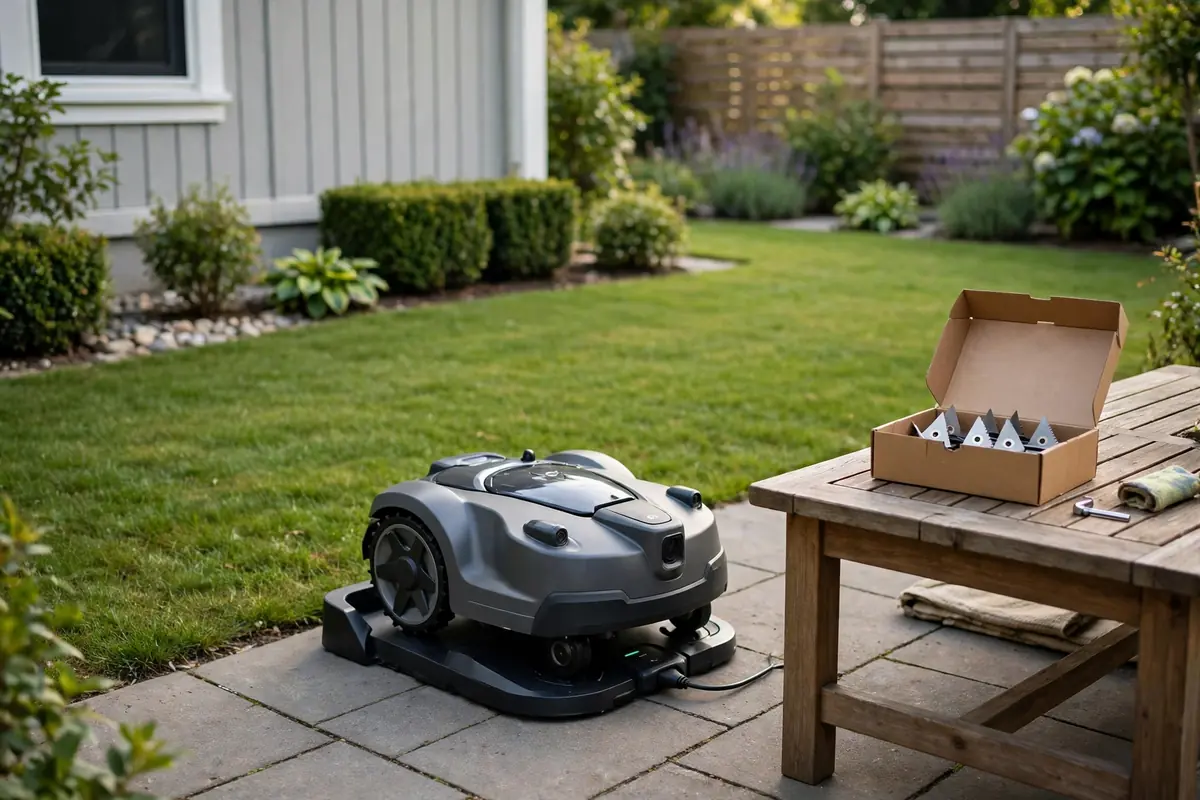
Robot mower running costs are usually modest, but they are not zero. For most owners, the yearly cost comes from electricity, replacement blades, routine maintenance, and — less often — a replacement battery or a repair. Winter storage and servicing can add to the total, especially if you pay someone else.
Electricity is often the smallest part. Blades are the most regular consumable. A battery is the largest single replacement cost, but it usually arrives after several seasons. The total depends on lawn size, schedule, grass, terrain, climate, and model, so this guide gives a framework you can adapt.
A Simple Framework for Robot Mower Running Costs
Split costs into three groups: every season, occasionally, and sometimes. That stops a rare battery replacement from making a normal year look expensive, and stops a cheap first year from hiding later costs.
| Cost group | What it includes | How often |
|---|---|---|
| Every season | Electricity, blades, cleaning | Several times a year |
| Occasionally | Battery, wheels, contacts, wire repairs | Every few years |
| Sometimes | Service, shelter, spare parts | Only if needed |
For each item, note what your model needs, how often, and where to buy it. Check the manual first: blade type, battery type, and service intervals vary by model. Keep a yearly log — date, item, and cost. To compare the cost of owning robot mower models, use the same worksheet for each one.
Robotic Mower Electricity Cost
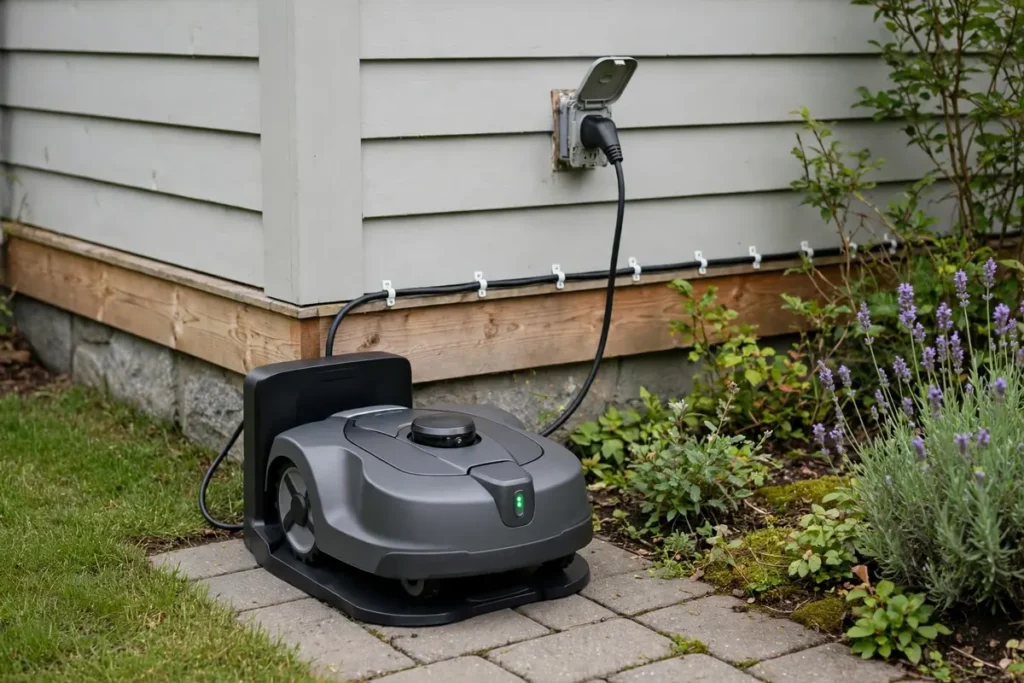
The robotic mower electricity cost follows one formula: annual cost = annual use (kWh) × your price per kWh. A kilowatt-hour, or kWh, is the unit on your bill: a device using 1,000 watts for one hour uses 1 kWh. Robot mowers use far less power at any moment than a corded electric mower, but they run often and charge many times, so the seasonal total still matters.
Use the price from your own bill, not a national average. In the United States, the U.S. Energy Information Administration (EIA) reported an average residential price of 17.3 cents per kWh in 2025, with 18.2 cents projected for 2026. That is a national average, not your rate. Outside the United States, use your local currency and your supplier’s current rate.
How much a mower uses is harder to pin down. Some list battery capacity in amp-hours or watt-hours, which is not the same as electricity drawn from the wall. Wall-plug use also includes charging losses and dock idle power. Lawn size, frequency, grass density, slopes, wet grass, and temperature all change consumption.
Check the manual for stated energy use, or measure with a suitable plug-in meter over two to four weeks in the main season, keeping connections dry.
The table below is an illustration using the EIA 2026 projected U.S. average of 18.2 cents per kWh. The consumption figures are examples only, to show the arithmetic. They are not typical values and do not describe any particular model.
| Illustrative use | Calculation | Illustrative cost |
|---|---|---|
| 30 kWh | 30 × $0.182 | $5.46 |
| 60 kWh | 60 × $0.182 | $10.92 |
| 100 kWh | 100 × $0.182 | $18.20 |
Even at the highest figure here, electricity alone is a small yearly cost. Replace both numbers — use and price — with your own. A dock can also draw standby power while parked, so check your manual before unplugging it.
Safety note: Keep the dock, power supply, and connections dry, follow the manual’s installation instructions, and do not open the power supply or charging station. If a cable, plug, or dock looks damaged, switch it off at the socket if safe to do so and contact the manufacturer or an authorised service provider.
Robot Mower Replacement Blades
Robot mower replacement blades are the cost most owners notice first. Most robot mowers use small, sharp razor-style blades on a cutting disc. They cut a little grass at a time, often, rather than taking a large cut once a week. That frequent, light cutting helps keep the lawn tidy, but it also means blades dull with use.
How often you need new blades depends on mowing hours, grass type, soil, stones, and debris. Dull blades tear grass, leaving pale tips and an uneven finish. Watch for a ragged finish, uncut patches, or nicked blades, and inspect regularly following the manual.
Blade prices vary by model, pack size, retailer, and region. This guide gives no price, because any figure would be out of date or wrong for many models. Find the correct part number in your manual, check the current price from an authorised dealer, and note the pack size and how many your mower uses. Keep a spare set at home.
Safety note: Blades are sharp even when they look small. Switch the mower off and follow the manual’s shutdown steps before inspecting, cleaning, or changing blades. Wear gloves if the manual advises it, handle blades by their safe edges, and dispose of used blades as the manual or local waste rules require. Do not bypass safety switches or run the mower with a guard removed.
Robot Mower Battery Replacement Cost
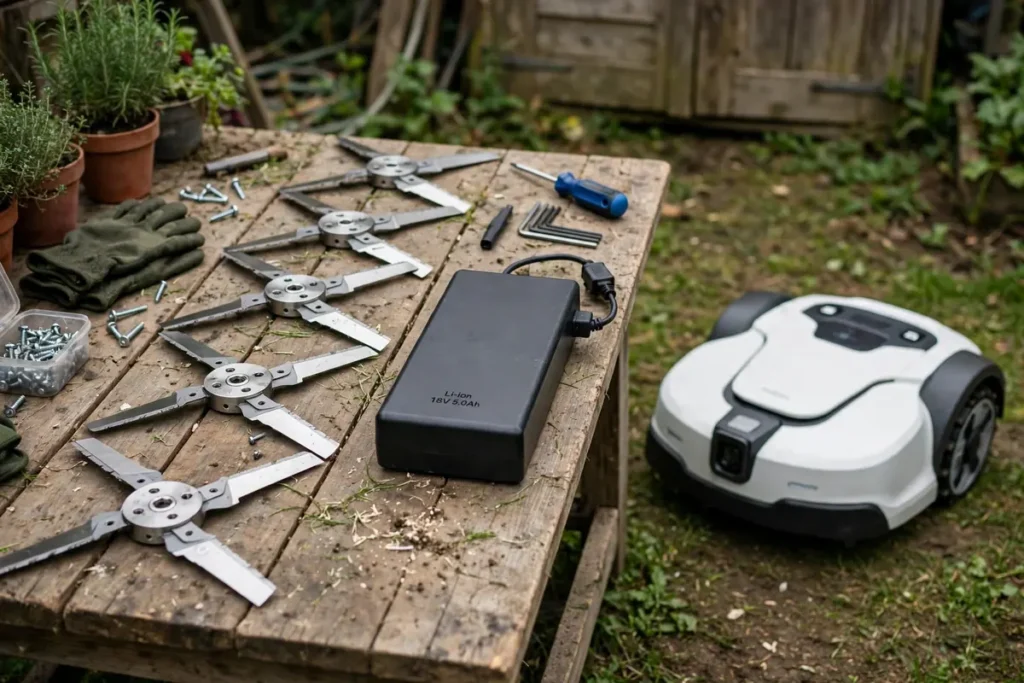
The robot mower battery replacement cost is usually the largest single running cost, but it is not an annual cost for most owners. Most modern robot mowers use a lithium-ion battery, which slowly loses capacity with age and charge cycles. How long it lasts depends on the battery, how often the mower runs, charging habits, temperature, and storage. Do not assume a universal battery life.
If run time falls sharply or it stops mid-mow with a battery warning, check the manual and contact support before ordering a part. Cost depends on battery type, capacity, who fits it, and availability. Some batteries are owner-replaceable; others need an authorised provider. A fault within warranty may be covered; normal wear after warranty usually is not.
Get a current quote for your exact model from an authorised dealer or the manufacturer. Ask whether it includes fitting and any software step. Do not order a battery by size or voltage alone. To plan, divide the quoted cost by the expected number of seasons to get an annual allowance.
Follow the manual on charging, temperature, and storage. Do not charge a damaged battery, or open, puncture, or repair one. If a battery is swollen, leaking, very hot, or damaged, switch the mower off if safe, keep it away from flammable material, and contact the manufacturer.
Robot Mower Maintenance Cost
The robot mower maintenance cost is mostly time, plus a few small items. Regular care keeps the cut clean and helps you spot wear before it becomes a repair. A typical routine, adapted to your manual, includes cleaning the underside, disc, blades, and wheels with the mower switched off; checking wheels for wear or damage; wiping charging contacts; and cleaning sensors gently. If your mower uses boundary wire, check the perimeter for damage.
Do not pressure-wash unless the manufacturer permits it. Most tasks need only a brush, a cloth, and time. You may need wheels, a brush, or a wire repair kit; check the current price for your model. If you use a service provider, get the scope in writing first.
Repairs, Service, and Winter Storage
Repairs are the least predictable running cost. Some owners go years with only blades and cleaning; others need a wheel, a sensor, a dock part, or a boundary wire repair after damage or heavy use. Wire can be cut by edging, digging, or animals; repair usually means finding the break, joining the wire with a suitable connector, and testing the loop, as the manual or manufacturer support explains. A damaged dock, power supply, or cable should be replaced with the correct part for your model. Do not use a substitute power supply, and do not open sealed motors or modify drive parts.
Some models need a subscription or mobile data for features such as remote access — check before you buy. Also check warranty length, cover, and local service. Keep receipts, the serial number, and purchase date, and record error messages exactly. Do not open the housing, battery compartment, or power supply unless the manual allows it, and do not bypass safety features.
In cold climates, most robot mowers are stored indoors during winter, with the dock disconnected if the manual advises it. Off-season tasks include a thorough clean, blade and wheel checks, and battery preparation as directed. Storage costs can include a shelter, cover, or professional winter service; ask what it includes. At the start of the next season, inspect the mower and run a short test mow.
A Worked Yearly Budget You Can Adapt
Use this worksheet to build your own yearly total. It uses no fixed prices for parts, because those depend on your model and location. Fill in each row with a current local price in your currency.
| Yearly item | Your estimate | Notes |
|---|---|---|
| Electricity | Your kWh use × your rate | |
| Replacement blades | Packs per season × pack price | |
| Cleaning and small parts | Brushes, wire kit, wheels if needed | |
| Battery allowance | Quoted battery cost ÷ expected seasons | |
| Service or repairs | Only if needed; use a local quote | |
| Winter storage or shelter | Only if you buy or pay for it | |
| Yearly total | Add the rows above |
Ask three questions: how big is the lawn and how often will it run? How long is the season? Will you do maintenance yourself? Revisit the worksheet after your first season and replace estimates with real figures.
How to Keep Costs Down
Match the mower to the lawn, keep the lawn clear of stones, sticks, toys, cables, and pet waste, clean little and often, and change blades before the cut suffers. Follow the manual on charging and storage, fix small wire damage early, and compare parts by part number and authorised sellers. Do not use the wrong blades, a substitute battery, or a non-approved power supply.
Conclusion
Electricity is usually the smallest part, and you can calculate it from your own use and rate. Blades are the regular consumable, and a battery is the main long-term cost, so get a quote for your exact model and set aside an annual allowance. Before you buy, note the manual’s blade, battery, and service requirements, check current local prices, and build your own yearly worksheet.
Frequently Asked Questions
How much does it cost to run a robot mower per year?
It depends on lawn size, schedule, electricity price, blade use, and whether a battery or repair is due that year. Use the formula in this guide — annual kWh × your price per kWh — plus current local blade and service prices.
What is the robotic mower electricity cost per month?
Divide your annual electricity cost by the months in your mowing season, not by twelve. First estimate annual kWh use from the manual or a plug-in meter, then multiply by your rate.
How often should I replace robot mower blades?
There is no universal interval. Check the manual, inspect blades regularly, and replace them when nicked, bent, or dull enough to tear grass. Mowing hours, grass type, stones, and debris all affect wear.
How much does a robot mower battery replacement cost?
It varies widely by model, battery type, capacity, availability, and fitting. Get a current quote for your exact model, check the warranty, and divide it by the expected number of seasons.