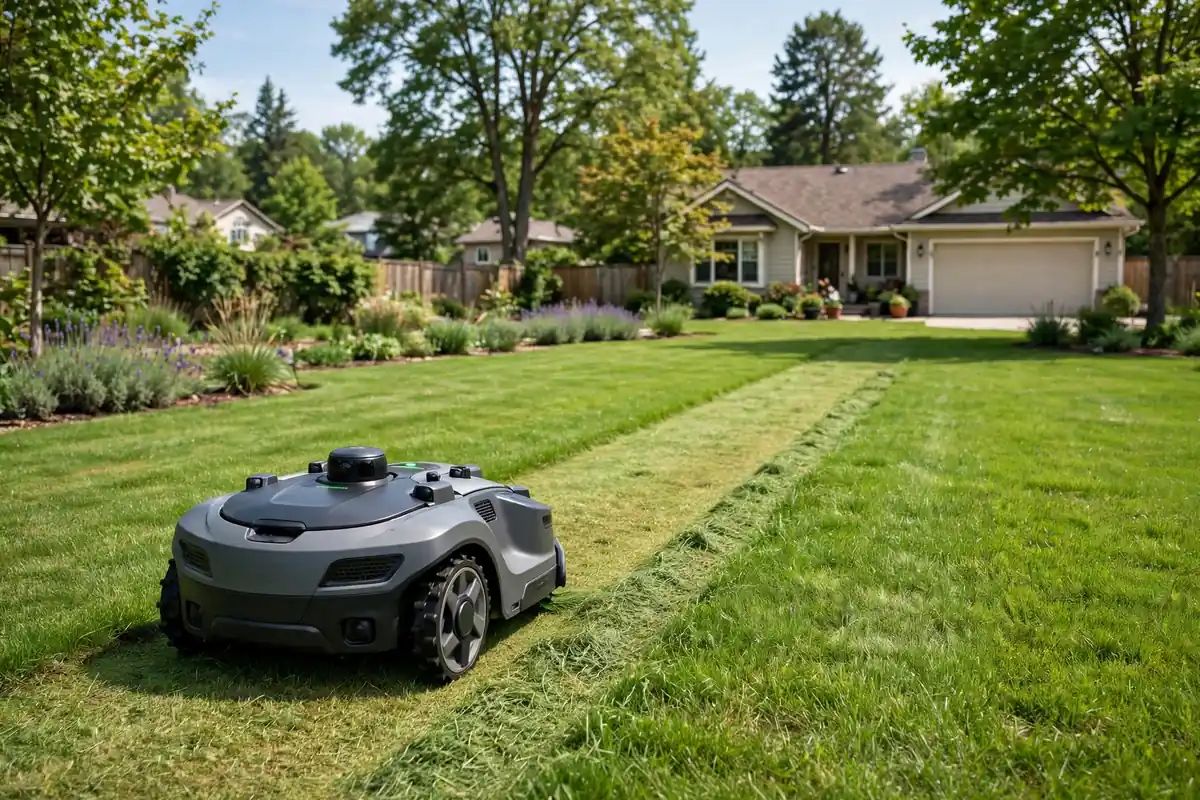
Is a robot lawn mower worth it? For many homeowners with a suitable lawn, yes. It removes the regular job of pushing a mower and keeps grass at a steady length with little weekly effort. For others, the answer is no, at least for now, because the upfront cost is high, the lawn is too steep or complicated, or a conventional mower already does the job quickly and cheaply.
Value comes from the match between the machine, your lawn, and how much you dislike mowing. A small, open, level lawn is a good candidate; a large, steep, or obstacle-filled one may need a costlier model and professional installation. Prices vary by model, retailer, region, and season, so check current local prices for the exact model you are considering.
When a Robot Mower Is Most Likely Worth It
A robot mower is most likely to feel worth the money when you mow often, your lawn is within its rated area, and you want it kept short and even without a weekly chore. Instead of letting grass grow long and cutting a large amount at once, the mower trims a little at a time. That can leave a tidy finish and reduce the need to collect clippings, because small cuttings usually fall back into the lawn.
It is less clearly worth it when your lawn is very small, you enjoy mowing, or you already have a reliable mower. Then the convenience may not justify the price, setup time, and ongoing care. It is an automatic helper, not a replacement for all lawn care: edging, clearing leaves, and weeding still need human attention.
Robotic Lawn Mower Pros and Cons
A balanced look at robotic lawn mower pros and cons is more useful than a list of selling points.
| Area | Benefit | Limitation |
|---|---|---|
| Regular mowing | Cuts often, little weekly effort | Still needs setup, checks, and cleaning |
| Lawn finish | Keeps grass short and even | May struggle with long, wet, or uneven grass |
| Effort | Removes pushing and starting a petrol mower | Installation and moving it can involve lifting |
| Noise | Usually quieter than a petrol mower | Still makes some sound |
| Scheduling | Can work on a set schedule | Needs a safe schedule, clear of children and pets |
| Lawn shape | Works well on open, simple lawns | Complex layouts and steep slopes can be difficult |
| Cost | Can reduce paid mowing or fuel use | High upfront cost; parts and batteries add later cost |
| Safety | Sensors and blade-stop features are common | Blades are sharp; never bypass safety features |
Lawn shape matters most. A robot mower follows a boundary, a map, or a signal, within its design limits. A simple rectangle is easy; a garden split by paths, beds, trees, toys, and narrow gaps is harder, and the mower may miss areas or get stuck.
Is a Robot Lawn Mower Worth It: Cost Benefits
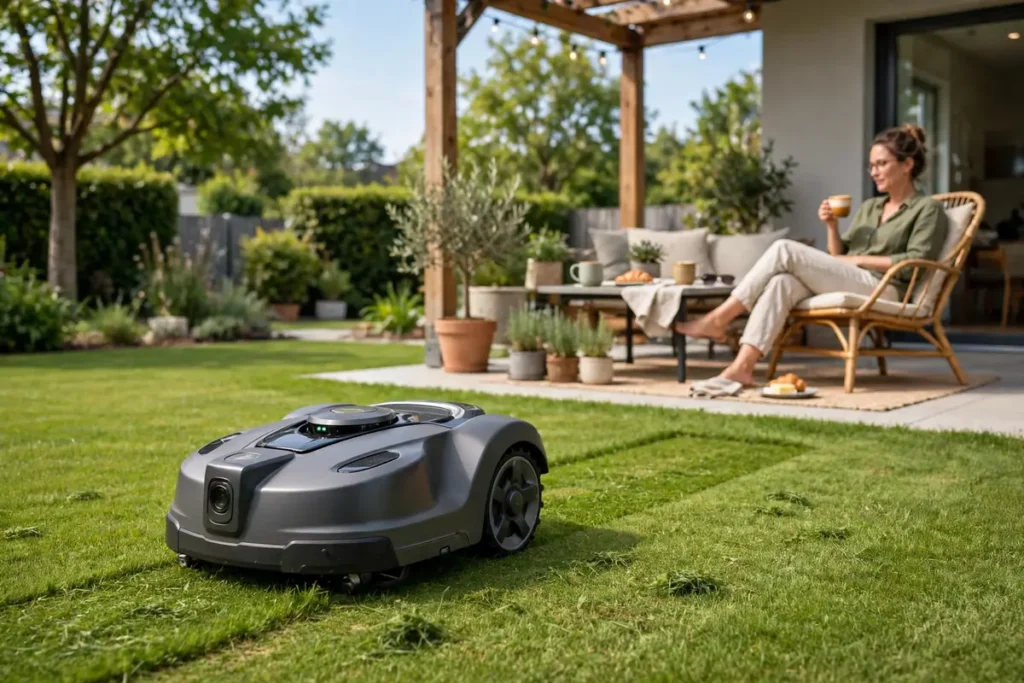
When people ask about robot mower cost benefits, they often mean: will it save money? That is rarely the right first question. A robot mower is usually a convenience purchase first and a money-saving purchase second. It may reduce spending on a mowing service or on fuel and maintenance for a petrol mower, but those savings build slowly and depend on what you pay now.
The main cost is the mower itself. Larger-capacity models, models that handle slopes or complex gardens, and models with GPS-assisted mapping or wire-free setup usually cost more. You may also need accessories: boundary wire and pegs, a charging station, a shelter, spare blades, and possibly a cover. Professional installation is another possible cost.
Buying the wrong size is costly too. A model rated for a much smaller area may run for long periods, wear faster, or leave parts uncut, while an oversized model means paying for capacity you never use. Check the rated area, slope limit, and cutting width, measure only the grass to be cut, and compare prices from more than one retailer.
Robot Mower Running Costs
Robot mower running costs are usually lower than those of a petrol mower, but they are not zero. The main ongoing costs are electricity, blades, and, over a longer period, a replacement battery and other wear parts.
Electricity use depends on mower size, lawn size, how often it runs, and local prices. Robot mowers use small electric motors, so the cost for a typical domestic lawn is often modest compared with the purchase price. Check the model’s power use and apply your local rate if you want an estimate.
Blades are a regular consumable. Most robot mowers use small razor-style blades that need replacing when dull or damaged; a dull blade can tear grass rather than cut it cleanly. The battery is a larger, less frequent cost, as it loses capacity over time. Store and charge the mower as the manual advises, and check spare-part cost and availability before you buy.
Installation: The Part Many Buyers Underestimate
Installation is where many robot mowers succeed or fail. A good installation makes the mower reliable. A rushed one can lead to missed patches, the mower getting stuck, or the boundary being crossed.
Wired models use a boundary wire around the lawn edge and around obstacles you want to protect. Laying it neatly takes time, especially around beds, trees, and irregular edges. Place it at the distance the manual specifies. If it is too close, the mower may bump into a wall or drop off an edge. If it is too far in, it may leave a wide uncut strip.
Wire-free models use satellite positioning, cameras, or other navigation instead of a wire. They still need a clear map, a well-placed charging station, and a good signal or view. The station needs power, level ground, and clear space. Test the mower while you are at home before leaving it to run alone.
Time Saved and Automatic Lawn Mowing Value
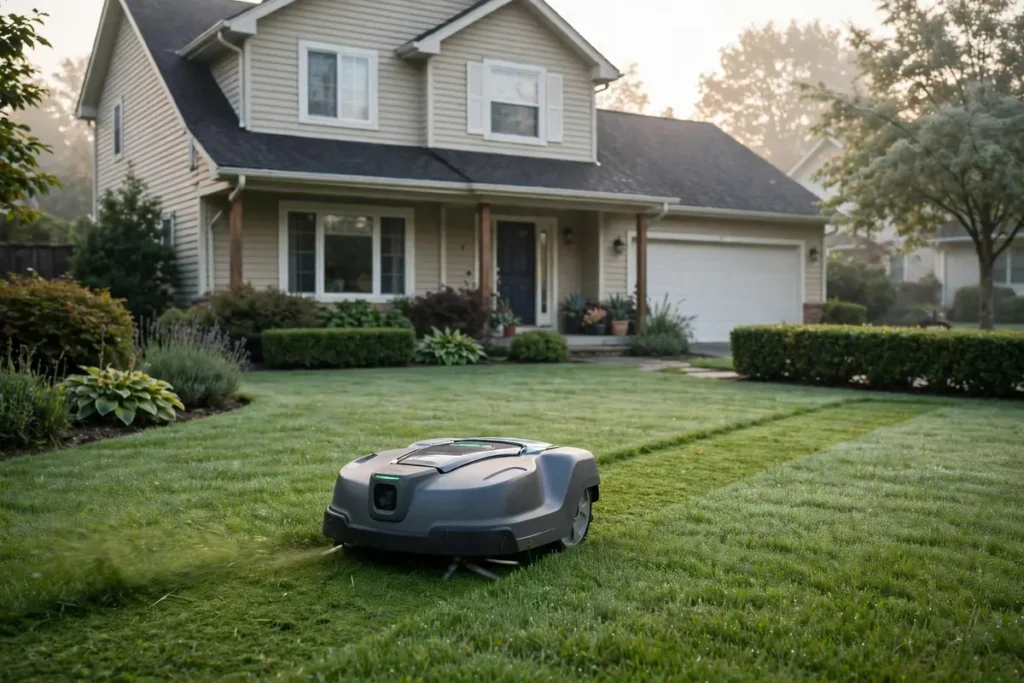
The clearest benefit is time. You no longer need a regular slot to push a mower around the garden, especially in the main growing season. The mower can work in short sessions through the week. That is the core of automatic lawn mowing value: the lawn stays maintained without a weekly chore.
How much time you save depends on your current routine: larger or awkward lawns save more time. A robot mower does not remove all lawn work. You will still need to edge, clear leaves and sticks, pick up toys and tools, and check the mower. Fallen leaves can interfere with cutting, and some manuals advise against mowing in wet weather.
Maintenance and Replacement Parts
Robot mower ownership includes regular maintenance. Clean the underside to remove grass buildup, especially after wet mowing. Check and replace blades, and clean wheels, sensors, and charging contacts so the mower can move and dock correctly. Check boundary wire for damage after digging, edging, or heavy use.
At the end of the growing season, clean the mower, check blades and battery, and store it in a dry, sheltered place. In spring, check the wire, station, and settings. If unsure, check the specific model manual, and do not use a pressure washer unless the manual says it is safe.
Limitations to Take Seriously
Know the limits before you buy. Every model has a maximum slope rating, which can differ for slopes inside the lawn and at the boundary. A mower that handles a gentle slope may struggle on a steep bank, especially when grass is wet. Check the rating for the exact model and compare it with the steepest part of your lawn.
Narrow passages, tight corners, separate lawn areas, and many obstacles can reduce coverage. Leaves, twigs, stones, and pet waste can also cause problems: a robot mower cuts grass, not debris, and large objects can damage blades or stop it, so pick them up before a run. Wet grass can clog the mower, soft ground can cause wheel slip, and bad weather may call for a pause, depending on the manual.
Safety matters too. Blades are sharp, so never lift or handle the mower while running. Keep children and pets away, and use child-lock, lift-sensor, and PIN features as instructed. Do not bypass a safety feature. If a sensor is damaged or the mower behaves strangely, stop using it and seek advice from the manufacturer or dealer. Theft is also possible; a PIN or alarm is a deterrent, not a guarantee.
How to Decide for Your Lawn
- Measure the lawn and note its shape, slopes, and narrow areas. Do not include paths and beds.
- List obstacles such as trees, beds, ponds, steps, and play equipment.
- Check how much time you spend mowing now and whether you find it difficult or unpleasant.
- Compare two or three models rated for your lawn area and slope, and read the exact manual for each.
- Add up the likely total cost: mower, accessories, installation, blades, and a future battery.
- Check spare-part availability, warranty terms, and local dealer support.
- Think about storage, charging, and a suitable spot for the station.
If most steps point to a good fit, a robot mower is more likely to be worth it. If several point to problems, wait, choose a different model, or keep a conventional mower for now.
Conclusion
So, is a robot lawn mower worth it? It is worth it when the lawn suits the machine, the total cost fits your budget, and the time saved matters to you. It is not worth it when the lawn is too steep or complex, the model is the wrong size, or the purchase would strain your budget for a small gain. Look beyond the headline price, compare current local prices, read the manual, and measure your lawn before you buy.
Frequently Asked Questions
Is a robot lawn mower worth it for a small lawn?
It can be if you dislike mowing or find it difficult, but for a very small lawn that takes only a few minutes to cut, the purchase and setup cost may outweigh the time saved.
How much does a robot lawn mower cost to run?
Running costs are usually modest compared with the purchase price, but not zero. The main costs are electricity, replacement blades, and, over time, a replacement battery. Costs vary by model, lawn size, use, and local prices.
Does a robot mower replace all lawn care?
No. It cuts grass little and often, but it does not edge, feed, water, remove weeds, clear leaves, or repair bare patches. Those jobs, plus regular mower cleaning and blade changes, still need doing.
Can a robot lawn mower handle slopes and complex gardens?
Some models handle gentle slopes and fairly complex layouts, but every model has limits. Check the maximum slope rating and rated lawn area for the exact model. Narrow passages, steep banks, and separate lawn areas can reduce coverage.
Is a robot mower safe around children and pets?
It can be used safely if you follow the manual, keep children and pets away while it runs, and use safety features such as lift sensors and a PIN. Never lift it while running, and do not bypass safety features.
What maintenance does a robot mower need?
Regular cleaning, blade checks and replacement, and cleaning wheels, sensors, and charging contacts are typical. At the end of the season, clean and store it as the manual advises. Battery replacement is a longer-term cost.