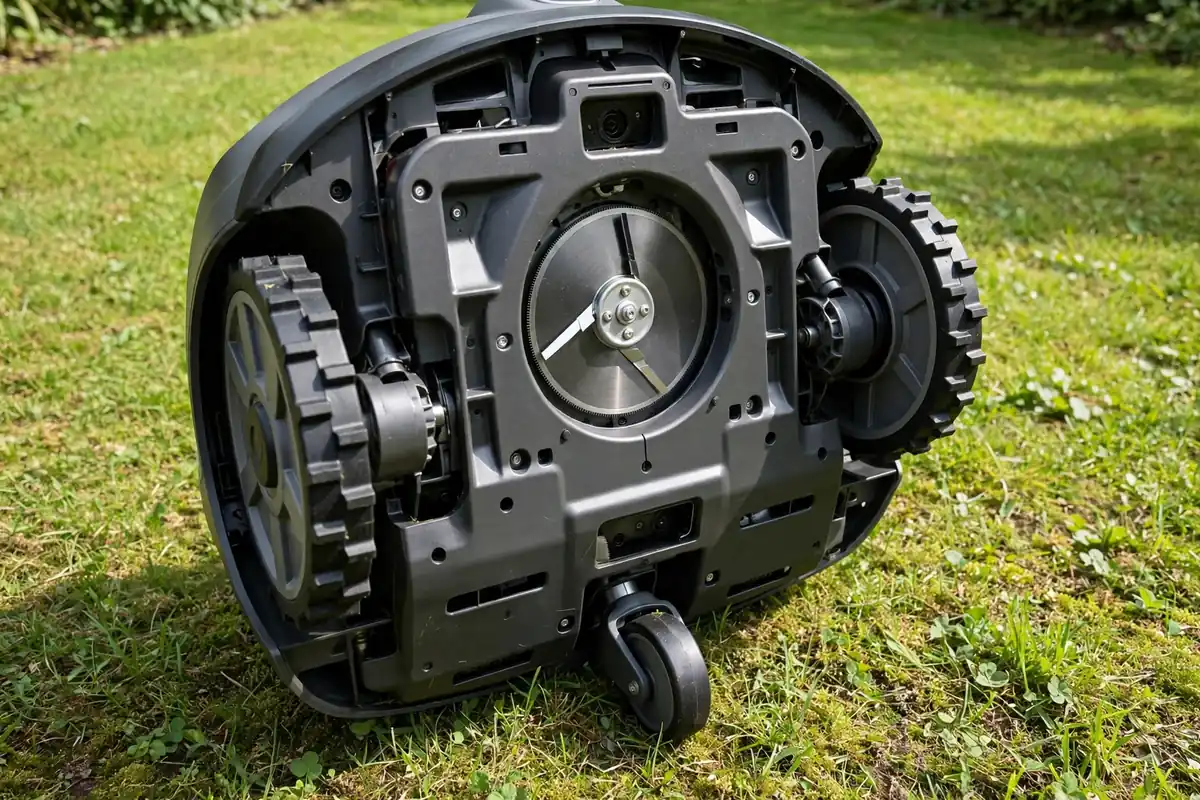
Robot mower wheel maintenance is simple, regular care: remove grass and debris from the wheels, clean the tread, inspect the tires for wear or damage, and check that the wheels turn freely. Clean wheels grip better, follow the route more accurately, and are less likely to get stuck.
Wheels carry the mower’s weight, help it turn, and help it climb gentle slopes. When traction drops, the mower may spin its wheels, slide sideways, or struggle to dock. Most problems start small — mud in the tread, a wrapped strand of grass, or a tire that has slowly worn smooth. This guide covers debris removal, inspection, traction symptoms, lawn conditions, wear, and safe checks. It does not cover tire modifications.
Robot Mower Wheel Maintenance: Why Wheels Lose Traction
Traction is the grip between the tire and the ground. Wet grass is a common cause of slipping: dew, rain, and watering leave the surface slick, especially on smooth or shaded lawns. Mud fills the tread and coats the tire until it becomes smooth. Leaves, clippings, soil, and twigs can also build up around the wheels and in the housings, pressing against a wheel or stopping it from turning evenly. Wear is slower but just as important: tires lose tread depth with use, and rubber can harden or crack with age and sun exposure.
Signs You Have Robot Mower Traction Problems
Watch for wheels spinning without moving the mower forward, the mower sliding sideways or drifting off its path, ruts or scuffed grass where it has spun, trouble climbing a slope it used to handle, trouble docking, one side moving more slowly than the other, or getting stuck in the same damp spot. A single slip after rain is not necessarily a problem. Repeated slipping in dry conditions or on flat ground is a stronger sign that the wheels need attention. If a wheel will not turn at all, inspect it and do not keep running it.
Safety First: Switch Off Before You Touch the Wheels
Before any robotic mower wheel cleaning or inspection, switch the mower off and disconnect it from power according to your manual — usually by turning off the main switch and removing the mower from the charging station. Never reach under a mower, near the wheels, or near the blades while it is switched on or charging. Wait for all moving parts to stop, wear gloves when handling mud or sharp twigs, and keep your hands and tools away from the cutting blades, even when the mower is off. Do not bypass safety switches or interlocks to test a wheel, lift the mower by a wheel, or force a stuck wheel to turn. If a wheel feels seized or grinds, leave it alone and seek professional advice.
What You Need for Wheel Maintenance
You do not need specialist tools for routine wheel care. Gather gloves, a stiff brush or an old toothbrush, a plastic scraper or wooden stick for dried mud, a cloth and clean water, and small scissors for cutting wrapped grass or string. Avoid metal tools that can scratch the tire, and avoid pressure washers and strong solvents. High-pressure water can force moisture into bearings, motors, and electronics, while solvents can damage rubber and plastic. Plain water, a brush, and a cloth are enough. Keep the manual nearby: some models have removable wheels, and some have a front caster wheel as well as two drive wheels.
Step 1: Remove Mower Wheel Debris
Mower wheel debris is often the fastest fix for slipping. Grass, mud, leaves, and string can wrap around the axle or pack into the tread until the wheel loses grip. With the mower switched off on a flat surface, turn each wheel slowly by hand — it should turn smoothly, without catching or wobbling. Brush loose grass and soil away, and lift dried mud from the tread grooves with a plastic scraper or wooden stick, working around the full circle of the tire. Cut wrapped grass or string carefully with scissors, a little at a time. Do not yank it, and if it looks like wire, stop and seek service advice.
Step 2: Robotic Mower Wheel Cleaning
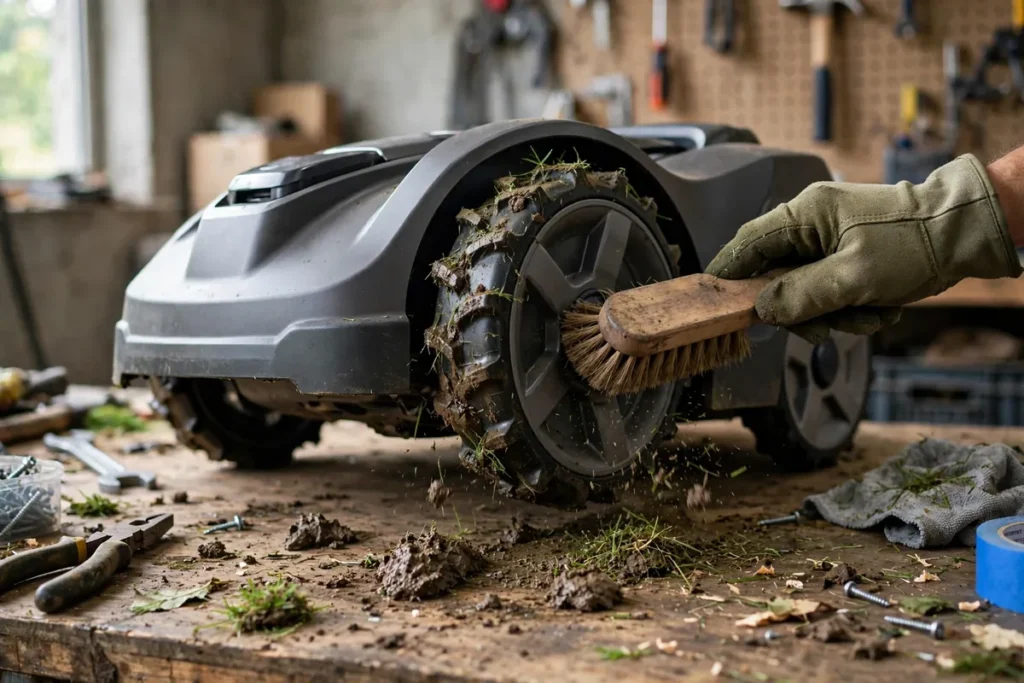
Robotic mower wheel cleaning goes a step further than removing loose debris: it restores the tread pattern so the tire can grip the grass again. Wipe each tire with a damp cloth and use the brush to clean the grooves in the tread, where mud often hides. If the tire is caked in mud, wipe in sections, rinsing the cloth as you go. Do not soak the wheel housing or spray water at the axle, motor area, or any openings. Clean the housings as well, using a dry brush first, then a damp cloth. Let the tires dry before you judge the result.
Step 3: Robot Mower Tire Inspection
A regular robot mower tire inspection helps you spot wear before it becomes a traction problem. Do this after cleaning, when the tread is visible. The tread pattern should still be clear and deep enough to grip; a smooth center means the tire is wearing out. Check for uneven wear, which can make the mower pull to one side, and for cracks, cuts, or chunks missing from the tread. Very hard or shiny rubber can be a sign of age or sun damage. Hold each wheel gently and check for side-to-side movement; a loose or wobbling wheel is not normal for most models. If you find deep cuts, missing tread, or a cracked wheel, contact the manufacturer or a qualified service provider, and use only parts approved for your model.
Step 4: Check That the Wheels Turn Freely
After cleaning and inspection, turn each drive wheel slowly by hand with the mower switched off. It should move smoothly through a full turn, without grinding, clicking, or sticking. A scraping sound may mean debris is still caught in the housing, while a clicking or grinding sound may mean something is damaged inside. If you hear that, stop and seek service advice rather than forcing the wheel. If a wheel feels stiff after cleaning, recheck the axle area and housing for packed debris. If it is still stiff, leave it and get professional advice.
Robot Mower Wheels Slipping on Slopes and Wet Grass

Robot mower wheels slipping on slopes and wet grass is one of the most common complaints. Wet grass is slippery, even for a mower in good condition. If your mower often slips in the morning, try mowing later in the day when dew has dried, and avoid mowing right after heavy rain or watering. A slope that is fine when dry can be a problem when wet. If the mower slips on the same slope repeatedly, check the wheels first, then look at the grass cover: thin or bare patches give the tire less to grip. If the mower follows the same path every day, it can wear shallow ruts into soft ground. Changing the mowing pattern or schedule, if your model supports it, can spread wear more evenly. Never try to fix slope slipping by adding weight, fitting unapproved tires, or attaching grip aids that your manual does not approve.
Lawn Conditions That Affect Traction
Your lawn and your mower work together. A healthy, even lawn gives the wheels a better surface to grip. Wet or waterlogged ground lets the wheels sink and spin, so let the lawn dry before mowing. Bare soil is smoother than grass, offers less grip, and turns to mud more easily. Very long grass can wrap around wheels and axles and hide ruts or wet patches, so keep the lawn within the mowing height range in your manual.
Wear, Age, and When to Replace Wheels or Tires
Wheels and tires wear out with use. How fast that happens depends on how often the mower runs, the size and slope of the lawn, and how well it is maintained. There is no single lifespan that applies to every model. Watch for tread that is smooth across most of the tire even after cleaning, cracks that are deep or spreading, a deep cut, a chunk missing, or a bulge, one wheel much more worn than the other, traction that stays poor on dry, flat grass after cleaning, or a wheel that wobbles or feels loose. If you see any of these, contact the manufacturer or a qualified service provider and ask which replacement fits your exact model. Use only approved parts.
A Simple Wheel Maintenance Routine
A short routine is easier to keep. Adjust it to your lawn and weather.
| When | What to check | Why it matters |
|---|---|---|
| Weekly | Brush off loose grass and soil | Prevents buildup and slipping |
| After rain | Clean tread grooves and housings | Mud fills tread fast |
| Monthly | Inspect tires for wear and cracks | Catches wear early |
| Monthly | Turn each wheel by hand | Finds a stiff wheel early |
| Start of season | Clean wheels and inspect tires | Sets a baseline after storage |
| End of season | Clean and dry wheels | Prevents dried mud over winter |
What Not to Do
Some fixes sound helpful but can make traction worse or create a safety risk. Do not fit unapproved tires, chains, studs, or grip attachments, and do not add weight to the mower to improve grip. Do not use solvents, petrol, or abrasive cleaners on tires, and do not use a pressure washer on wheels, axles, or housings. Do not spray lubricant into a wheel motor or bearing unless your manual tells you to. Do not force a stuck wheel, and do not bypass a safety switch to test it. If a problem does not improve after cleaning and inspection, seek professional advice.
Conclusion
Good traction starts with clean, well-inspected wheels. Remove debris, clean the tread, check for wear, and make sure each wheel turns freely. Pay attention to wet grass, slopes, and lawn conditions, and adjust when you mow when you can. Most wheel problems are easy to prevent with a short weekly check and a closer monthly inspection. When you find wear or damage, act early and use only approved parts.
Frequently Asked Questions
How often should I clean my robot mower wheels?
Check the wheels weekly in the mowing season, and clean them after wet or muddy mowing. Add a monthly inspection of tread and free turning.
Why does my robot mower slip on wet grass?
Wet grass is slippery, and mud can fill the tread so the tire cannot grip. Clean the wheels, let the lawn dry, and try mowing later in the day.
How do I remove grass wrapped around a robot mower wheel?
Switch the mower off and disconnect it from power according to your manual. Cut the wrapped grass carefully with scissors, a little at a time, and pull it free. If it looks like wire, seek service advice.
Can worn robot mower tires cause traction problems?
Yes. As tread wears down, the tire has less grip, especially on damp grass and slopes. If the tread looks smooth after cleaning, have the tires assessed.
Should I use tire shine or lubricant on robot mower wheels?
No, unless your manual specifically tells you to. Tire shine and lubricants can make tires slippery, attract dirt, or damage rubber. For routine care, plain water, a brush, and a cloth are enough.
What should I do if one wheel turns but the other does not?
Switch the mower off and disconnect it from power. Clean both wheels, check for debris around the stuck wheel, and turn it gently by hand. If it still does not move freely, or if it grinds or clicks, do not force it. Seek professional advice.